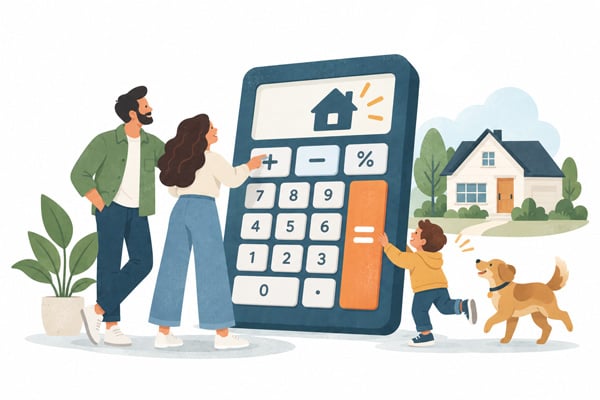
Use our mortgage calculator to estimate your monthly payment, explore different price ranges, and see how factors like your down payment and interest rate could affect your costs.
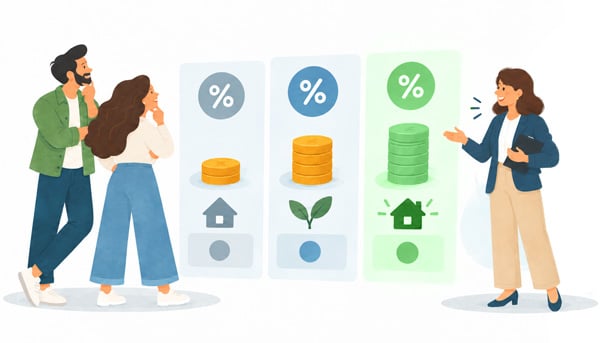
Churchill Mortgage offers a variety of loan options with different down payment requirements. We’ll help you explore what may be available and find an option that fits your budget and home buying goals.
Preparing your finances before you start looking can make your home search easier.
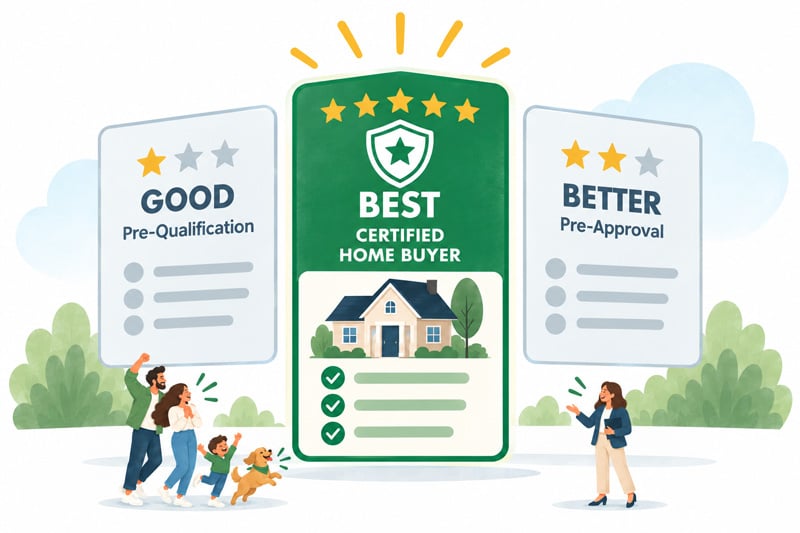
With Churchill’s Certified Home Buyer program, an experienced underwriter reviews your finances upfront, helping you shop with confidence and make a stronger offer when you find the right home.
No, you do not always need a 20% down payment to buy a home. Qualified buyers may be able to purchase with as little as 3% down through certain conventional loan programs or 3.5% down with an FHA loan. Eligible VA and USDA borrowers may qualify for no-down-payment financing.
Putting 20% down can reduce the amount you borrow and may help you avoid private mortgage insurance (PMI) on a conventional loan. However, waiting until you save 20% is not necessarily the right choice for every buyer. Down payment assistance programs may also help eligible buyers cover a portion of their down payment or closing costs.
A Churchill Mortgage Home Loan Specialist can compare your available loan programs, estimated monthly payments and upfront costs to help you choose a down payment that fits your overall financial plan. Eligibility and program availability vary.
Should I get pre-approved before looking at homes to buy?
Yes, getting pre-approved before you begin seriously shopping for a home is a smart first step. A mortgage pre-approval helps you understand how much you may be able to borrow, estimate a comfortable monthly payment and focus your search on homes within your budget.
A pre-approval can also show sellers and real estate agents that you are a serious buyer with financing already underway. While it is not a final loan approval or guarantee of financing, it can help you identify potential issues early and be better prepared to make an offer when you find the right home.
A Churchill Mortgage Home Loan Specialist can review your financial information, explain your loan options and help you take the next step toward becoming a Churchill Certified Home Buyer, giving sellers greater confidence in your offer.
Which mortgage is best for a first-time home buyer?
There is no single mortgage that is best for every first-time home buyer. The right loan depends on your income, credit history, available down payment, location and how long you plan to own the home.
Common options include:
Conventional loans: Certain programs allow qualified buyers to put as little as 3% down.
FHA loans: May offer more flexible credit requirements with a down payment as low as 3.5%.
VA loans: Eligible military borrowers may qualify with no down payment and no monthly mortgage insurance.
USDA loans: Qualified buyers purchasing in eligible areas may qualify for no-down-payment financing.
Down payment assistance programs: State and local programs may help eligible buyers with upfront costs. (is it worth having a landing page where you can select your state? We can still use the widget in some situations, but for social media, or other links within the website, it may be worth having a linkable page that leads you to the dropdown menu to the states?)
A Churchill Mortgage Home Loan Specialist can compare the interest rate, mortgage insurance, monthly payment, closing costs and long-term cost of each option to help you choose a mortgage that supports your financial goals.
There is no single credit score required to buy a home. The minimum depends on the mortgage program, lender requirements and your overall financial situation. A score of 620 is a common starting point for many conventional loans, while FHA and other loan programs may offer options for qualified buyers with lower scores. Generally, a higher credit score can help you access more loan options and potentially better terms.
Your credit score is only one part of the mortgage decision. Lenders may also review your income, employment, debt-to-income ratio, down payment and payment history.
If you live without traditional credit and do not have a credit score, that is different from having poor credit. Churchill Mortgage offers no-credit-score home loans with manual underwriting, which may use documented payment histories—such as rent, utilities or insurance—to evaluate qualified borrowers. A Churchill Mortgage Home Loan Specialist can review your full financial picture and help you understand your available options.
Should I wait until I have a larger down payment?
The best down payment is one that fits your financial situation without draining your savings or delaying homeownership unnecessarily. In fact, most first-time home buyers put down far less than 20%.
Many conventional mortgages allow qualified buyers to purchase with as little as 3% down, while FHA loans typically require 3.5% down. And some buyers may even qualify for loans that require no down payment at all.
The reason 20% gets so much attention has more to do with the long-term cost of the home loan. There are state and federal down payment assistance programs designed to help buyers cover part or all their down payment and closing costs.
A smaller down payment usually means:
A higher monthly mortgage payment
Added costs like Private Mortgage Insurance (PMI)
More interest paid over time compared to a larger a down payment
Click here to see how a down payment impacts your monthly payment.


 Secure Form
 Takes 1 Min
 See Your Options