Published: February, 20, 2026 | Time to Read: 5 minutes | Word Count: 0
A Clearer Direction Is Emerging in 2026
With inflation cooling and inventory expanding in key metros, February’s data provides clearer signals than we’ve seen in recent months. Buyer leverage is returning in select markets, while affordability remains a defining theme nationwide. Here’s a breakdown of what’s shifting.
.jpg?width=800&height=533&name=iStock-629811942%20(1).jpg)
January’s 2.4% inflation reading marks the lowest level since early 2021 — easing pressure on consumers and helping stabilize long-term rate expectations.
The Big Picture: February Economy & Rates
Inflation Is Easing, and That’s Setting the Tone for Housing
Before we get into inventory and price cuts, it helps to start with the bigger economic picture. Housing doesn’t operate in a vacuum — it moves with inflation, consumer spending, and Federal Reserve policy. January gave us some encouraging signals.
Here’s what the latest data shows:
-
Inflation cooled to 2.4% year-over-year, down from 2.7% in December — the lowest reading since early 2021.
-
Financial markets are pricing in a 90.3% probability that the Federal Reserve keeps its benchmark rate in the 3.5%–3.75% range at its March meeting.
-
Gas prices fell 3.2% in January and are now down 7.5% year over year.
- Housing costs rose just 0.2% for the month and 3.0% annually, signaling a noticeable slowdown in shelter inflation.
👉 The Takeaway
None of this guarantees mortgage rates will fall overnight. But it does suggest we’re no longer in an accelerating inflation environment, and that stability is important. When inflation cools and the Fed pauses, long-term rate pressure typically eases over time. That’s part of what’s helping the housing market move toward a more balanced footing in early 2026.
.jpg?width=800&height=567&name=iStock-1413870149%20(1).jpg) Homeowners have built up about $434 billion in equity, and instead of refinancing, many are using HELOCs to renovate or pay down higher-interest debt.
Homeowners have built up about $434 billion in equity, and instead of refinancing, many are using HELOCs to renovate or pay down higher-interest debt.
National Housing Trends – February 2026
The Market Is Shifting... Just Not in a Dramatic Way
After several years of tight inventory and competitive bidding, the housing market in 2026 looks more balanced. Inventory is rising in many parts of the country, homes are taking a little longer to sell, and sellers are gradually adjusting pricing expectations. The shift isn’t dramatic, but it’s consistent and it’s creating more negotiating room than buyers have had in recent years.
Here’s what we’re seeing nationally:
-
New listings rose 3.2% year-over-year, giving buyers more options than they had last winter.
- Median list prices dipped 2% year-over-year, marking the largest annual decline in over a year.
- Median days on market increased to 46 days, up from 41 a year ago and 39 in December.
- About 19.3% of new construction homes saw price cuts in late 2025 as builders responded quickly to affordability pressures.
- Existing home sales fell 8.4% month-over-month in January to a 3.91 million annual pace — the sharpest one-month drop in nearly four years.
- National home-equity balances climbed to $434 billion, as many homeowners tapped HELOCs instead of refinancing into higher rates.
- Sellers accepted an average 9% discount on all-cash offers in 2025, as buyers offering certainty gained leverage.
At the same time, we’re seeing some financial stress surface:
- Serious mortgage delinquencies rose 18.6% year-over-year in December.
- Homeowners are staying in their homes an average of 8.5 years, the longest tenure recorded in at least 25 years, limiting resale inventory.
👉 So, what does all of this actually mean for you?
It means the market isn’t frozen — it’s recalibrating. Buyers have more breathing room than they’ve had in years. Sellers can still sell, but pricing and presentation matter more. Builders are competing harder. And homeowners are leaning on equity as a financial cushion instead of rushing to move. That’s what a transition year looks like.
.jpg?width=800&height=534&name=iStock-1448082112%20(1).jpg)
Miami is sitting at nearly 10 months of housing supply — well above the 6-month benchmark for a balanced market. In cities like this, buyers have more room to negotiate than they’ve had in year.
Where Buyers Have the Most Leverage in 2026
Inventory Is Building in Several Major Metros
While the national market is gradually rebalancing, some cities are moving faster than others. In real estate, six months of supply is generally considered a balanced market. Anything above that tends to give buyers more negotiating room. Several major metros are now sitting well above that benchmark.
Here are some of the most buyer-friendly markets heading into spring 2026:
- Miami — 9.8 months of supply | ~$500K median
- Austin — 9.5 months | ~$462K
- Pittsburgh — 8.6 months | ~$240K
- Orlando — 7.4 months | ~$415K
- New York City — 7.1 months | ~$750K
- Tampa — 7.0 months | ~$400K
- Las Vegas — 6.9 months | ~$465K
- Raleigh — 6.5 months | ~$440K
- Jacksonville — 6.5 months | ~$382K
- Atlanta — 6.3 months | ~$400K
- Nashville — 6.2 months | ~$529K
👉 In these areas, homes are generally sitting longer than they were a year ago, and price reductions are becoming more common. That doesn’t mean values are collapsing, it simply means sellers are facing more competition.
Policy & Industry Moves to Watch – February 2026
Supply and Affordability Are Back in Focus
Beyond inventory and pricing trends, housing policy is getting more attention in 2026, particularly around supply, entry-level construction, and homeowner mobility.
-
On February 9, 2026, the House passed the Housing for the 21st Century Act in a 390–9 bipartisan vote. The bill aims to reduce regulatory barriers, streamline construction approvals, and expand financing options to increase housing supply.
-
Major homebuilders are reportedly exploring a proposal to build up to 1 million entry-level homes targeted toward first-time buyers. One concept being discussed includes a rent-to-own structure where up to three years of rent could be credited toward a future down payment. The proposal remains tentative and does not yet have confirmed federal backing.
-
Lawmakers are also considering updates to the 1997 capital gains exclusion cap, which currently allows single sellers to exclude up to $250,000 in gains and married couples up to $500,000. With national homeowner equity now estimated at $34.7 trillion, some policymakers argue that adjusting the cap could reduce “lock-in” and encourage more listings.
-
Even global investors are signaling long-term confidence in U.S. housing. Tokyo-based Sumitomo Forestry recently announced a $4.5 billion acquisition of one of America’s largest homebuilders, reinforcing the view that long-term housing demand in the U.S. remains strong despite short-term rate pressures.
👉 The Takeaway
Builders continue adjusting to affordability pressures. In several markets, new construction has become more competitive than resale homes, with price reductions and incentives playing a larger role.
None of these proposals represent immediate market shifts, but they do signal that supply, affordability, and mobility remain central themes heading into 2026.
.jpg?width=800&height=533&name=iStock-905902112%20(1).jpg) About 40% of buyers and sellers say they’re concerned about a housing market crash in 2026 — yet 73% still say it’s a good time to buy.
About 40% of buyers and sellers say they’re concerned about a housing market crash in 2026 — yet 73% still say it’s a good time to buy.
Consumer Sentiment Snapshot
Buyers Are Cautious, But Not Backing Down
Even as inventory improves and inflation cools, consumer confidence hasn’t fully caught up. A recent report from Clever Offers shows that buyers and sellers are entering 2026 with a mix of hesitation and determination.
Here’s what the data shows:
-
40% of buyers and sellers say they’re concerned about a potential housing market crash in 2026.
-
98% expect challenges this year, with inflation and overall living costs topping the list.
-
Nearly 40% worry about affording monthly housing payments as expenses remain elevated.
-
55% believe home prices will rise this year, though many agents expect more moderate, localized growth.
-
Despite those concerns, 73% say it’s a good time to buy and 72% say it’s a good time to sell.
-
The income required to purchase a median-priced home fell from $103,000 a year ago to $94,000 today, signaling gradual improvement in affordability.
👉 The Takeaway
Buyers are more payment-sensitive than they were a few years ago. Sellers are watching pricing more closely. But most people who need to move are still planning to move.
February Regional Housing Snapshot
What’s Happening Across the Country
While national trends are shifting toward balance, local markets continue to move at their own pace. Here’s a concise look at what stands out by region.
Northeast Housing Market Update – February 2026
Affordability varies widely across the Northeast, with some surprisingly strong buyer conditions emerging in select metros.
-
Pittsburgh ranks among the strongest buyer markets nationally, with nearly 9 months of supply and median home prices around $240,000 — well below many coastal peers.
-
Homeowners in Massachusetts (13.3 years) and Connecticut (13.0 years) are staying in their homes longer than almost anywhere in the country, limiting resale inventory and keeping supply constrained in many metro areas.
- Pennsylvania lawmakers are considering legislation to cap annual lot rent increases for manufactured housing communities, affecting roughly 56,000 households statewide.
- In Maryland, proposals to allow smaller homes and lot splits in an effort to address an estimated 100,000-home shortage.
Southeast Housing Market Update – February 2026
Several Southeast markets are clearly tilting toward buyers as inventory builds.
-
Miami (9.8 months of supply), Orlando (7.4), Tampa (7.0), and Jacksonville (6.5) are all above the 6-month benchmark, giving buyers more negotiating leverage than they’ve had recently.
-
Atlanta and Nashville are also trending more balanced, with fewer bidding wars and more pricing adjustments compared to peak pandemic conditions.
- Raleigh recorded a 4.3% year-over-year price decline in January, marking one of the more notable price corrections among major U.S. metros.
- The Carolinas continue to rank among the top states for inbound migration, supporting longer-term housing demand even as short-term pricing cools.
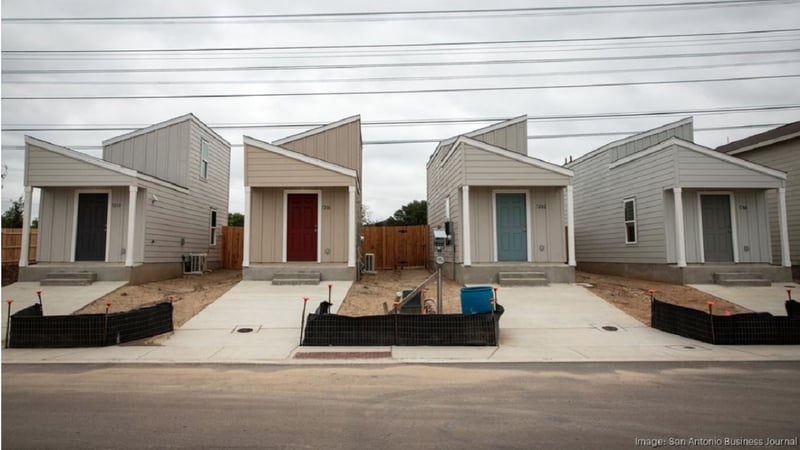 To keep homes affordable, some Texas builders are reducing square footage — with 350-square-foot homes in San Antonio selling near the $100,000 price point.
Midwest Housing Market Update – February 2026
The Midwest continues to stand out for relative affordability, especially compared to coastal markets. Select cities are seeing renewed demand as buyers look for value.
-
Kansas City jumped 70 spots year over year in Realtor.com’s Hottest Markets ranking — the largest gain nationally — with a typical home price around $380,000, still below the U.S. median.
-
State capitals like St. Paul, Minnesota ($404,950 median) and Lincoln, Nebraska ($389,000) rank highly for livability and affordability compared to other capitals nationwide.
- Indianapolis, Detroit, Cleveland, and Columbus all rank among Zillow’s most buyer-friendly large metros in 2026, highlighting affordability and more negotiating room compared with many coastal markets.
- Des Moines, Iowa recently adopted a new citywide housing strategy focused on proactive property acquisition and neighborhood revitalization — a signal that some Midwest cities are taking long-term, place-based approaches to rebuild aging housing stock and address pockets of blight.
Texas Housing Market Update – February 2026
After several years of outsized population growth and price acceleration, many Texas markets are settling into more balanced conditions.
- In Greater Houston, inventory expanded to 4.7 months, while the median price near $322,045 marked its lowest level since January 2024.
- Builders are responding to affordability pressures by reducing home sizes, with some 350-square-foot homes in San Antonio selling near the $100,000 price point.
- Pending sales in the Austin/Central Texas region rose 10.1% year-over-year, signaling that buyer activity is picking up heading into spring.
- Austin homeowners are staying in their homes longer than at any point in the past 20 years, averaging 7.3 years of tenure, which continues to limit resale supply.
Southwest Housing Market Update – February 2026
The Southwest continues to face affordability challenges, but lawmakers and builders are actively looking for solutions.
-
Provo–Orem, Utah now ranks as the youngest metro in the U.S., with a median age of 27 and median single-family home prices around $590,000, highlighting strong long-term demand.
-
New Mexico lawmakers are advancing more than 20 housing-related bills, including $110 million in funding, aimed at expanding supply and lowering construction costs.
-
Oklahoma City remains relatively affordable and steady, with median prices near $259,000–$260,000 and homes selling in about 64 days.
- Loveland, Colorado is emerging as a “sleeper” market between Boulder and Fort Collins, attracting downsizing buyers. With single-family prices around $575,000, it offers relative value compared to nearby higher-cost metros.
.jpg?width=800&height=533&name=iStock-2155877023%20(1).jpg) In California, buyers now need nearly 49% of household income to afford the median-priced home — well above the traditional 30% benchmark.
In California, buyers now need nearly 49% of household income to afford the median-priced home — well above the traditional 30% benchmark.
Northwest Housing Market Update – February 2026
Parts of the Pacific Northwest are seeing more selection than a year ago, particularly around transit corridors.
-
Seattle’s active inventory climbed 32.4% year-over-year in January.
-
Madison, Wisconsin ($474,900 median) ranks among the top state capitals for livability, low unemployment, and low foreclosure rates.
-
Idaho markets such as Blackfoot (~$305,000 median) and Pocatello (~$310,000) remain among the state’s lowest-priced housing markets, offering more attainable entry points than Boise.
California Housing Market Update – February 2026
California’s housing story in early 2026 continues to revolve around affordability — more than inventory, more than momentum. Statewide, buyers now need roughly 48.8% of household income to afford the median-priced home, which sits around $697,000. That’s well above the traditional 30% affordability benchmark and continues to shape buyer behavior across the state.
-
Los Angeles — buyers need about 72% of income to afford the median home.
-
San Diego — roughly 58% of income.
-
San Jose — about 54%, making it the most expensive major housing market in the country with a typical home price near $1.195 million — nearly three times the national median.
- Also, 54% of households in San Jose are married couples, compared to a national average of 47%, highlighting the income and household structure dynamics often required to compete in higher-cost markets.
-
More attainable options include Fresno (41%) and Bakersfield (40%), though even those markets remain above national norms.
Be sure to check back next month for our updated insights and trends to keep you informed on the latest developments. In the meantime, if you’re thinking about buying, selling, or refinancing, our Home Loan Specialists are always ready to help you make the right move.
Frequently Asked Questions
Check our FAQs for responses to our most popular questions about our monthly housing updates.