Published: May, 13, 2026 | Time to Read: 5 minutes | Word Count: 0
The housing market is heading into summer with more inventory, improving affordability, and signs of a more balanced market — but rising inflation, global uncertainty, and cautious consumer confidence are still shaping buyer behavior. From shifting home prices across major metros to new housing policies and affordability trends, here’s what stood out in the May 2026 housing market.
Key Takeaways: May 2026 Housing Market
- Inventory is up 4.2% year-over-year, with 1.23M active listings nationwide.
- Inflation jumped to 3.8% in April — the highest level in three years.
- Existing home sales rose 0.2% in April, while median prices hit a record $417,700.
- Housing affordability improved for the eighth straight month.
The Big Picture: Economy & Rates
- The U.S. added 115,000 jobs in April while unemployment held steady at 4.3%, but downward revisions pushed the three-month average job gain down to just 48,000 jobs per month.
- Inflation hit 3.8% in April — the highest level in three years — as gas prices jumped 28% year-over-year following the Iran conflict, adding new pressure to mortgage rates and overall affordability.
- Consumer confidence dropped in May, with nearly one-third of Americans citing gas prices and tariffs as major financial concerns.
- Fannie Mae has more than doubled its mortgage portfolio over the past year to $168.7 billion as the Trump administration pushes aggressive efforts to help lower mortgage rates and stabilize the housing market.
- With gas prices now averaging $4.52 per gallon nationwide (up roughly 50% since the Iran conflict began) President Trump is pushing Congress to temporarily suspend the federal gas tax to ease affordability pressure on consumers.
.jpg?width=800&height=533&name=iStock-2080777143%20(1).jpg)
Gas prices have surged 28% YoY following the Iran conflict, putting new pressure on inflation, mortgage rates, and affordability.
National Housing Market Trends: May 2026
Inventory is growing, affordability is slowly improving, and buyers are gaining more negotiating power — but rising living costs and economic uncertainty are still making many Americans cautious about homeownership.
- Financial insecurity is at an all-time high — 78% of Americans don’t feel financially secure, highlighting growing pressure on housing affordability.
- Existing home sales rose 0.2% in April to a 4.02 million annual pace, while inventory climbed to 1.47 million homes and median prices hit a record $417,700 — marking 34 straight months of year-over-year price growth.
- Buyers are taking longer to make decisions. Homes spent a median of 32 days on market in April, up from 29 days a year ago.
- Affordability is slowly improving. NAR’s Housing Affordability Index jumped from 101.4 last year to 110.6 in April, with the West seeing the biggest year-over-year improvement at 12.5%
- Thirty-seven percent of Americans have stopped long-term saving, and one in five are struggling to afford basic necessities, making it harder to save for a home.
- Home design is shifting away from “greige” neutrals and toward bold personalization, with growing demand for moody tile colors, colorful grout, custom patterns, and mosaics — including a 30% jump in mosaic sales over the last two years.
- Down payment myths are still holding buyers back. A new survey found 13% of homeowners didn’t realize they could buy with less than 20% down, while about 20% wished they had known more about down payment assistance programs.
.jpg?width=800&height=533&name=iStock-2181100813%20(1).jpg) Housing affordability is improving, with NAR’s affordability index jumping from 101.4 last year to 110.6 in April.
Housing affordability is improving, with NAR’s affordability index jumping from 101.4 last year to 110.6 in April.
National Housing Policy & Industry News: May 2026
Housing policy, technology, and affordability are all shaping how homes are being built and bought right now.
- Boomers are holding a massive share of housing supply — owning 34% of total home value ($13.8T) — but any “silver tsunami” of inventory will be slow and highly regional, with the biggest impact in retirement-heavy and more affordable markets.
- Wall Street giant Blackstone — which already owns roughly 58,000 single-family rental homes in the U.S. — announced plans to finance the construction of 50,000 new for-sale homes per year nationwide.
- New homes are now selling for less than existing homes, with a median price of $405,300 vs. $414,933, marking a rare reversal in typical market trends.
- After Spirit Airlines’ collapse, a Florida brokerage launched free real estate licensing scholarships for laid-off workers and has already seen more than 70 people sign up for the career transition program.
- Rising housing costs are keeping more seniors in the workforce, with participation up 52% over the past decade, as a new proposal aims to let them earn income without reducing Social Security benefits.
- A new app launched this month gives beginner investors access to deal analysis tools, after-repair value estimates, renovation calculators, and AI-powered investing guidance — all without MLS access.
- Housing groups are pushing back against the Trump administration’s proposed 13% cut to HUD funding, which includes a 70% reduction in fair housing funding and billions in cuts to affordable housing and community development programs.
.jpg?width=800&height=533&name=iStock-2210476996%20(1).jpg)
Baby boomers now own 34% of U.S. home value, but experts say any major wave of inventory hitting the market will likely happen slowly over time.
Top 10 States Retirees Are Moving to for Tax Benefits
Retirees continue flocking to states with little to no taxes on retirement income, helping many stretch their monthly budgets further. But while tax savings can make a big difference, it’s still important to look at the full cost of living — including housing, insurance, utilities, and property taxes — before making a move.
- Florida
- No state income tax
- Popular for warm weather and retirement communities, though home insurance costs can run high
- Texas
- No state income tax
- More affordable home prices in many areas, but property taxes can be higher than expected
- Tennessee
- No state income tax
- Growing popularity thanks to lower taxes and strong lifestyle appeal
- Nevada
- No state income tax
- Las Vegas continues attracting retirees with entertainment, dining, and relatively lower taxes
- New Hampshire
- No tax on earned income
- Scenic living and strong quality of life, though property taxes tend to be higher
- Washington
- No state income tax
- Strong economy and natural beauty, but housing costs remain elevated in some markets
- Alaska
- No state income tax
- Unique lifestyle perks and annual Permanent Fund dividend payments for residents
- South Dakota
- No state income tax
- Affordable living and growing retiree interest in cities like Sioux Falls
- Wyoming
- No state income tax
- Lower population density, outdoor lifestyle, and generally tax-friendly environment
- Pennsylvania
- No tax on retirement income
- Popular among retirees for affordability and access to East Coast cities
Regional Housing Market Updates: May 2026
What’s Happening Across the Country
While national trends are shifting toward balance, local markets continue to move at their own pace. Here’s a concise look at what stands out by region.
Southeast Housing Market — May 2026
- Chattanooga is tapping faith-based land to boost housing supply, with local religious groups partnering to develop up to 400 homes on 25+ acres, part of a national initiative unlocking underutilized land for affordable housing.
- Lee’s Summit, Missouri is one of the fastest-growing cities in the state, with population growth up 7.7% since 2020. The city’s revitalized downtown, expanded housing options, and strong quality-of-life amenities have helped push the median home price to around $375K.
- Tennessee markets are splitting. Nashville home values are down 3.2% year over year, while Knoxville (+0.8%) and Chattanooga (-0.7%) remain more stable and continue seeing relatively quick buyer activity.
- Zero-down mortgages continue to gain traction in the South, where 18% of buyers reported putting no money down on their home purchase.
Northeast Housing Market — May 2026
- New Jersey Governor Mikie Sherrill is pushing to accelerate housing supply through a new executive order that focuses on cutting regulations, using state-owned land, and boosting construction as the state faces a shortage of 224,000 affordable homes.
- Rhode Island is ramping up new construction with nearly 3,800 permits issued in 2025, the highest level since the 1980s, as policy changes begin to boost supply.
- Massachusetts is offering eligible first-time buyers up to $25K interest-free for down payments, closing costs, or rate buydowns through a new $25 million housing assistance program.
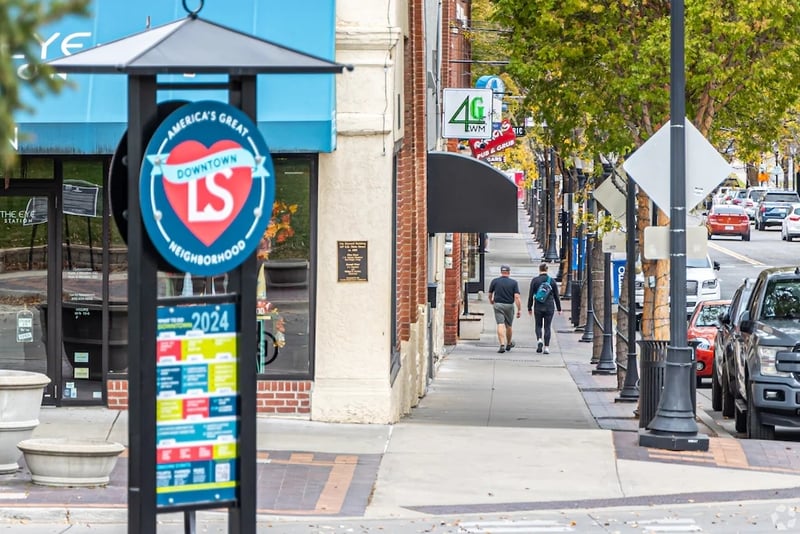
Lee’s Summit, MO is one of the fastest-growing cities in the state, with population growth up 7.7% since 2020. (Anya Ivantseva/CoStar)
Midwest Housing Market — May 2026
- The Midwest still has the highest homeownership rate in the country at 70.1%, well above the national average of 65.3%.
- Ann Arbor, Michigan is launching a first-of-its-kind city-owned renewable energy utility that will provide free solar panels and backup batteries to homeowners, helping support the city’s goal of carbon neutrality by 2030.
- A new “micro home” neighborhood outside Chicago is nearly half sold, offering 600-square-foot, energy-efficient homes starting at $369K — far below Evanston’s typical $830K home price.
Texas Housing Market — May 2026
- Texas home prices are cooling off, with statewide prices down 1.7% year-over-year. Austin prices fell 2%, San Antonio dropped 3.3%, and Houston declined 2.8%, while Dallas was the outlier with prices surging 14.7%.
- The average Dallas home price is now $311,957, with inventory rising to nearly 4,900 listings and 70% of homes selling below asking price.
- Texas home prices are expected to keep cooling through 2027, with Austin projected to see the largest drop at -4.6%, while cities like El Paso (+1.7%) and Brownsville (+2%) are forecasted to continue growing.
Southwest Housing Market Update – May 2026
-
Phoenix is shifting into a buyer-friendly growth phase as inventory expands and bidding wars cool, but long-term demand remains strong with 300K+ new housing units needed to support continued population and job growth fueled by major employers.
-
Utah’s Eagle Mountain is booming as an affordability hotspot with ~500 new residents moving in monthly, driven by lower-cost land, builder-friendly development, and incentives like up to $25K in first-time buyer assistance.
-
Las Vegas is stabilizing after its boom, but supply constraints remain a key pressure point — home values are still up ~38% in five years, while limited buildable land continues to restrict inventory and keep prices elevated despite a more balanced pace of sales.

A luxury home for sale sits nestled in Wood River Valley, ID where the median home price is $1.4M. (zillow.com)
Pacific Northwest Housing Market — May 2026
- Idaho’s Wood River Valley has effectively become an all-luxury market with a $1.4M median price and 62% of listings over $1M, limited land and strong second-home demand are keeping high-end prices elevated even after a post-pandemic reset.
- Spokane, WA home prices are holding steady at an average of $400,636, with nearly 28% of homes still selling above asking price and homes going pending in just 21 days.
-
Cheyenne, WY home values climbed 3.8% year-over-year to an average of $388,590, with homes going pending in just 17 days despite half of sellers accepting below-asking offers.
California Housing Market — May 2026
- California voters may soon decide on a proposed 5% one-time tax on billionaires, expected to raise $100 billion, as debates grow over affordability, wealth distribution, and potential impacts on high-cost housing markets.
- Fresno remains one of California’s more affordable housing markets, with average home values around $391K, while homes are still moving quickly, going pending in about 19 days.
- San Francisco’s AI-driven luxury market is surging. April’s top home sales ranged from $9.75M to $27.5M, with every property selling at or above asking price in under two weeks.
- San Diego home values remain above $1 million on average, with homes still going pending in just 16 days and more than 34% of properties selling above asking price.
Be sure to check back next month for our updated insights and trends to keep you informed on the latest developments. In the meantime, if you’re thinking about buying, selling, or refinancing, our Home Loan Specialists are always ready to help you make the right move.
Frequently Asked Questions
Check our FAQs for responses to our most popular questions about our monthly housing updates.